
Front-end PPF is usually the practical choice when your main concern is protecting the areas that take the most direct punishment from the road. Full-body PPF makes more sense when you want a consistent protective layer across nearly every painted exterior panel, including areas that are less exposed to frontal impacts but still vulnerable during everyday use.
Front end PPF concentrates paint protection film on high-impact areas such as the bumper, hood, front fenders, and mirrors, while full body PPF extends coverage across nearly the entire painted exterior. The better choice depends on how your vehicle is driven, which types of damage concern you most, how long you plan to keep the car, and how much you want to invest in protection.
That distinction matters in Riverside. Regular miles on the 91, SR-60, or I-215 can mean repeated exposure to loose road debris, construction material, insects, and small stones kicked up by surrounding traffic. Local driving also brings strong Southern California sun, busy parking areas, and the normal contact that comes with using a vehicle every day.
Neither package is automatically the better PPF installation. Choosing between front-end and full-body protection is really a decision about where you want the film to do its work. One concentrates your investment on the most vulnerable forward-facing surfaces, while the other takes a much broader approach to preserving the factory paint.
What Does a Front-End PPF Package Actually Cover?
A front-end PPF package concentrates film on the panels that face incoming road debris rather than covering the entire vehicle. Exact packages vary, but coverage commonly includes the front bumper, full hood, front fenders, and side mirrors.
Those areas are grouped together for a practical reason: they lead the vehicle into whatever is on the road.
At freeway speeds, a small stone or piece of debris doesn’t need to be large to leave a visible chip. The bumper encounters it first, followed by the hood and adjacent panels. Mirrors also protrude from the vehicle, making them natural impact points. For someone routinely commuting through Riverside on the 91 or I-215, that exposure accumulates mile after mile.
This is where partial PPF coverage differs from simply putting film on a few convenient panels. A well-planned package follows the vehicle’s actual impact zones, giving you clear bra protection where road damage is most likely to occur while leaving lower-risk areas uncovered.
At Freeway Tint, we also make sure the boundaries of a front-end package are clear before beginning a PPF installation. “Front end” can mean different coverage from one package to another, so knowing whether the hood and fenders are partially or fully covered, for example, prevents surprises after installation.
A front-end package ultimately puts the protection budget toward the surfaces doing the hardest work. For Riverside drivers primarily worried about freeway chips and frontal debris, that focused approach can make considerably more sense than protecting every painted panel.
What Changes When You Choose Full-Body PPF?
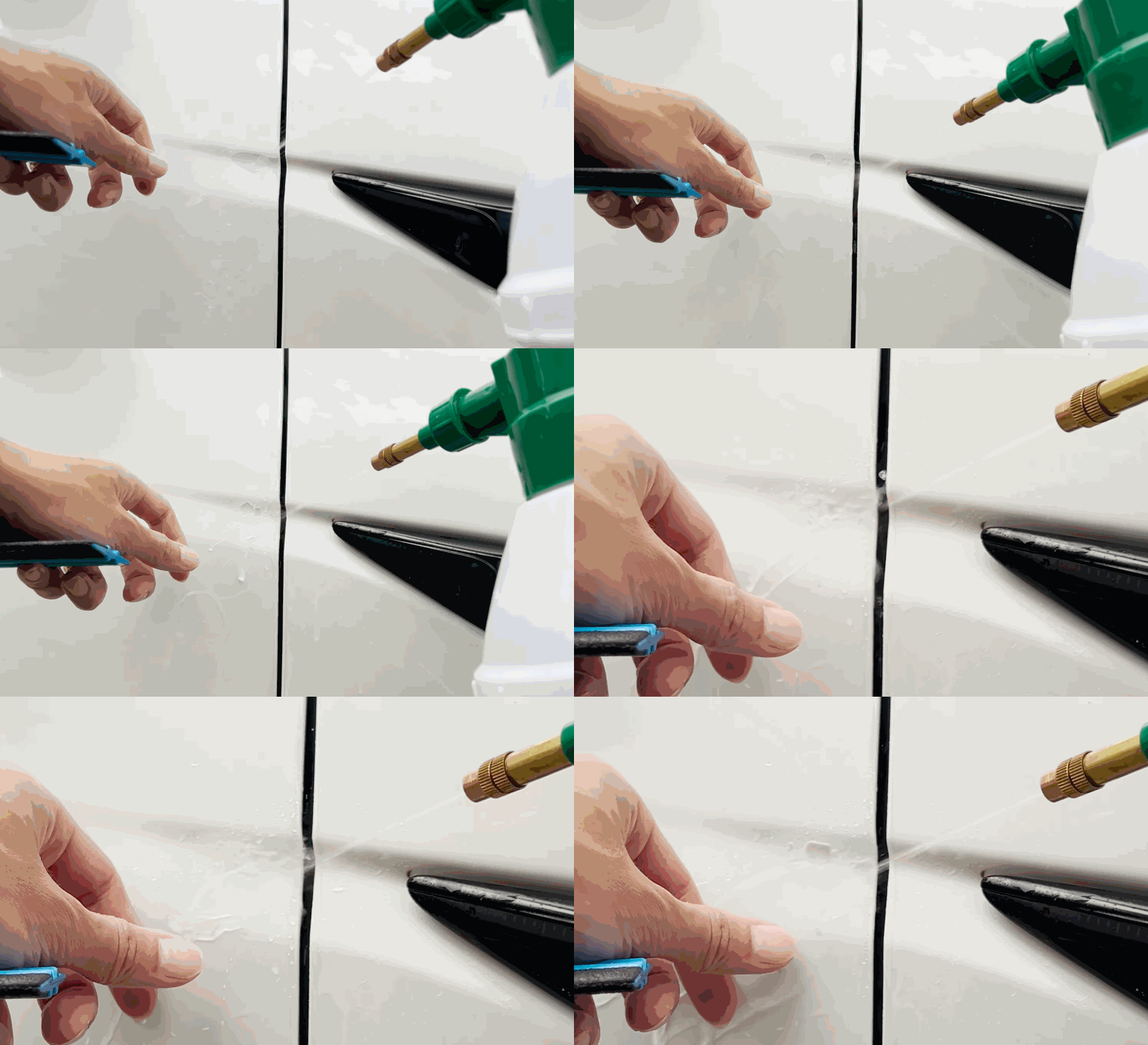
Full body PPF changes the objective from protecting primarily against incoming road impacts to preserving nearly the entire painted exterior. Doors, rear quarter panels, rocker areas, and other painted surfaces gain protection in addition to the familiar high-impact areas at the front.
That wider coverage matters because not every mark on a car comes from something flying toward it at highway speed.
Protection Follows You Into the Parking Lot
Doors and quarter panels are exposed to different hazards than a hood or bumper. Tight parking spaces can mean incidental contact, while loading items, brushing against the vehicle, or moving around it can introduce light scratches and scuffs. Lower areas can also collect road contamination and wear that front-only protection never reaches.
The Finish Becomes More Consistently Protected
With full vehicle PPF, nearly all painted panels have a sacrificial surface between the factory finish and everyday exposure. That consistency is often one of the biggest reasons owners choose complete paint protection, especially when maintaining the original finish across the entire vehicle is a high priority.
Full coverage still doesn’t make a car damage-proof. A significant impact can penetrate or damage the film and the paint underneath it. Paint protection film is designed to reduce specific forms of cosmetic wear, not turn the exterior into armor.
The additional coverage is therefore valuable when the goal itself is broader. Instead of asking only, “How do I prevent chips across the front?”, the full-body decision asks, “How much of my original paint do I want protected from routine exposure?”
Front End vs Full Body PPF: Where Does the Extra Coverage Matter?
The difference between front end vs full body PPF becomes most meaningful once potential wear moves beyond the bumper, hood, fenders, and mirrors. Both approaches can protect high-impact front surfaces, but only the broader package continues that protection around the rest of the vehicle.
Consideration | Front-End PPF | Full-Body PPF |
Coverage area | Primarily forward-facing, high-impact panels | Nearly all painted exterior panels |
Frontal road debris | Strong focus | Strong focus |
Doors and side panels | Usually uncovered | Protected |
Parking-related exposure | Limited protection outside the front | Broader exterior protection |
Installation scope | Fewer panels and edges | Significantly more extensive |
Typical priority | Concentrating protection where chips occur most | Preserving the overall exterior finish |
Importantly, choosing a larger package doesn’t necessarily mean choosing a fundamentally different type of film. Depending on the products and package involved, the paint protection film protecting the hood may be the same material protecting the doors. What changes dramatically is how much painted surface sits underneath it.
That makes the decision easier to frame. You’re not simply choosing “basic” versus “premium.” You’re deciding how much of your original paint you want separated from the kinds of exposure your vehicle encounters every day.
How Should Your Riverside Driving Habits Influence PPF Coverage?
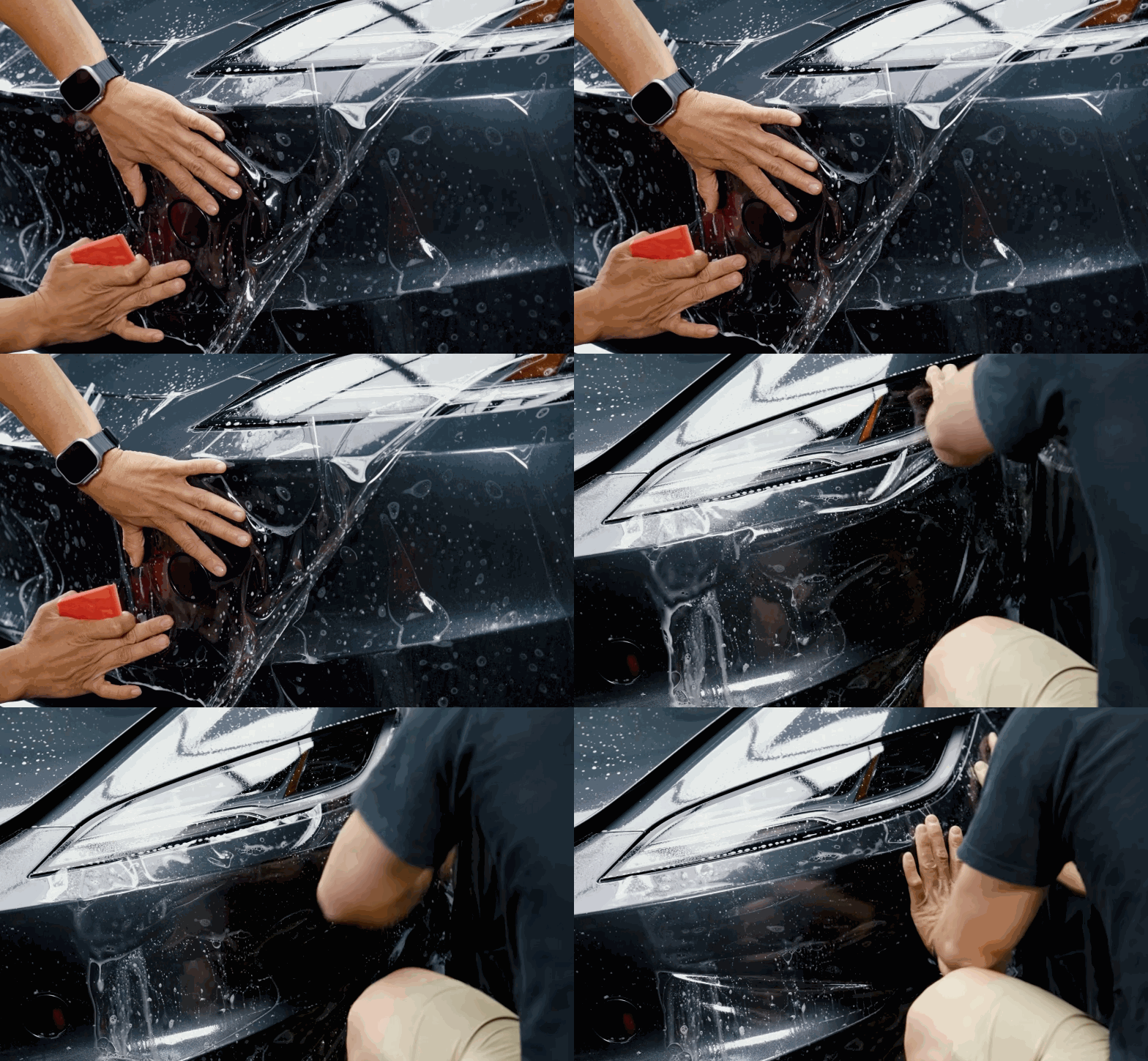
Your mileage, road type, parking environment, and everyday vehicle use should influence PPF coverage more than a generic recommendation based solely on the vehicle itself. Two Riverside drivers can put the same number of miles on identical cars and expose their paint to very different risks.
Someone spending much of the week on the 91, SR-60, or I-215 repeatedly puts the front bumper, hood, mirrors, and fenders in the path of debris thrown up by surrounding traffic. Construction zones and heavy freeway traffic can add to that exposure, making front-end protection particularly relevant for PPF for daily drivers.
A vehicle used mainly for shorter trips around Riverside presents another equation. It may see fewer sustained freeway miles but spend considerably more time in crowded parking lots, beside other vehicles, or parked outdoors. In that situation, doors, quarter panels, rocker areas, and other surfaces outside a traditional front-end package may matter more.
Even parking habits deserve consideration. A car that goes from a home garage to a private workplace parking space experiences a different environment from one regularly left in public lots or along busy streets.
At Freeway Tint, that’s the type of information we want to understand before suggesting Riverside PPF coverage. Mileage gives us one number, but it doesn’t tell us where those miles happen or what the vehicle encounters between trips.
Good vehicle paint protection should reflect that complete pattern of use. Once you identify where your paint is actually exposed, the choice between concentrated front-end coverage and broader full-body protection becomes much more practical.
Does Full-Body PPF Provide Enough Extra Value to Justify the Additional Coverage?
Full-body PPF can justify the additional expense when preserving nearly every painted panel is genuinely important to you. When your main concern is simply preventing chips across the front of the vehicle, however, paying for complete coverage can offer less practical PPF value for your priorities.
The calculation often starts with how long you expect to own the car. Protecting doors, quarter panels, rocker areas, and rear surfaces becomes easier to justify when you intend to keep a vehicle for years and care about limiting accumulated cosmetic wear. Your tolerance for imperfections matters just as much. Some owners notice every light mark, while others are perfectly comfortable with occasional wear outside the highest-risk areas.
Vehicle condition also changes the equation. A new car with pristine factory paint gives you an opportunity to protect that finish before much damage occurs. Specialty colors, difficult-to-maintain finishes, luxury vehicles, and enthusiast-owned cars can similarly make full car paint protection more appealing.
A vehicle already showing normal wear may call for a different decision. Because transparent film doesn’t erase existing defects, investing in complete coverage isn’t automatically worthwhile just because more paint gets protected.
That’s why PPF cost and coverage should be considered together. Full-body protection offers more coverage, but “more” only becomes better when you actually value what that additional film is protecting.
Want to see more about our other services?
When Is Front-End PPF the More Sensible Package?
Front-end PPF is often the more sensible package when rock chips, insect impacts, and freeway debris are the paint problems you care about most. It concentrates your investment where those threats are most likely to leave visible damage.
Highway Exposure
Frequent Riverside freeway driving strongly favors protection at the front of the vehicle. Repeated travel at highway speeds exposes forward-facing paint to stones, road grit, insects, and debris, even when the rest of the exterior experiences relatively little contact.
Budget Allocation
A limited protection budget doesn’t have to mean spreading coverage too thin. Prioritizing the highest-risk surfaces can be more useful than paying for extensive coverage that doesn’t match how you use the vehicle.
This is especially relevant for an everyday car where the goal isn’t to preserve every square inch in showroom condition. You can accept ordinary wear elsewhere while putting paint protection film where damage would otherwise accumulate fastest.
Existing Paint Condition
PPF is transparent, so what is underneath remains visible. Existing rock chips, scratches, staining, or other imperfections should therefore be evaluated before installation rather than assuming the film will hide them.
That makes front-end protection particularly attractive when those panels are still in good condition and you want to keep them that way. The package isn’t simply a smaller alternative to full-body coverage. For the right owner, it can be the more deliberate use of the protection budget.
When Does Full-Body PPF Make More Sense?
Full-body PPF makes more sense when you want consistent protection from front to rear and have a low tolerance for cosmetic wear anywhere on the exterior. Instead of deciding which panels deserve protection most, you’re choosing to preserve the painted body as a whole.
Long-term ownership can make that approach particularly compelling. Years of normal use create opportunities for light scratches, scuffs, contamination, and other cosmetic wear well beyond the front bumper. Owners planning to keep a vehicle for a long time may place more value on reducing that accumulation across doors, quarter panels, rocker areas, and other painted surfaces.
The calculation can also change with the vehicle itself. A new luxury car, specialty vehicle, enthusiast build, or finish that’s particularly difficult to maintain may justify full body paint protection film differently from an everyday vehicle where some cosmetic aging is acceptable.
There is also something to be said for consistency. Complete PPF coverage puts the same type of sacrificial protection across nearly all painted exterior panels, rather than dividing the vehicle into protected and unprotected zones.
At Freeway Tint, however, we don’t treat full-body coverage as the default simply because it protects more paint. If the way you drive and maintain your vehicle points toward a smaller package, that’s the recommendation that makes more sense. Full-body PPF earns its additional cost when comprehensive preservation is actually the goal.
Choose Protection Around Your Car, Not Around a Package Name
Front-end PPF prioritizes the surfaces most exposed to incoming road debris, while full-body PPF extends that protective barrier across nearly the entire painted exterior. Neither approach is universally better because they address different levels of exposure and different expectations for paint preservation.
For Riverside drivers, regular time on the 91, SR-60, and I-215, parking conditions, vehicle value, ownership plans, and tolerance for cosmetic wear all deserve a place in that decision. The objective should be to protect the areas that matter to you rather than choosing a package simply because its name sounds more comprehensive.
At Freeway Tint, we can inspect your vehicle, discuss how and where you drive, and help you select coverage without automatically steering you toward full-body protection. A thoughtful PPF installation starts with understanding what you’re trying to preserve.
Contact us to discuss professional PPF installation in Riverside, CA, and we’ll help you choose paint protection film coverage that makes sense for your vehicle, your driving habits, and the way you want your paint to look years from now.