
Paint protection film can be worth it for a daily driver in Riverside when you want to reduce the cosmetic damage that accumulates through regular commuting, freeway travel, parking, and exposure to road debris. You do not necessarily need to protect the entire vehicle, either. A well-planned PPF installation can concentrate coverage on the panels that take the most abuse.
For Riverside daily drivers, paint protection film provides a transparent sacrificial layer between factory paint and common hazards such as rock chips, road debris, bug residue, and light surface abrasions. Its value depends on how much you drive, the roads you use, how long you plan to own the vehicle, and how important maintaining the original finish is to you.
Daily driving is exactly what makes the decision interesting. A vehicle does not need to be exotic, collectible, or rarely driven for paint preservation to matter. Commuting along the 91, SR-60, or I-215 week after week exposes ordinary cars, trucks, and SUVs to thousands of opportunities for minor damage. One trip may not change the paint noticeably, but several years of those trips can.
PPF is not about expecting your vehicle to remain untouched forever. For us, the practical question is whether reducing that accumulated wear is valuable enough to justify protecting the areas that encounter it most often.
Why Can Daily Driving Be So Hard on Your Paint?
Daily driving exposes automotive paint to repeated small impacts and contaminants, and that repetition is what can gradually change the condition of the finish. Riverside freeway mileage adds another variable because speed increases the force with which loose material can reach forward-facing panels.
A normal week can expose your vehicle to more than you might realize:
- Loose road debris: Small stones and grit thrown by surrounding traffic can chip the bumper, hood, and fenders.
- Construction debris: Roadwork and heavily traveled corridors can introduce additional loose material onto the roadway.
- Bug impacts: Insect residue collects primarily on the front bumper, mirrors, and leading edge of the hood.
- Parking-lot contact: Light scuffs and incidental contact can occur away from the front end.
- Environmental contamination: Dust, bird droppings, tree residue, and other contaminants can sit on exposed surfaces between washes.
Not every encounter leaves visible damage, and paint protection film cannot prevent every type of damage. What matters is frequency. A vehicle that travels Riverside freeways five days a week experiences far more repeated exposure than one that spends most of its time garaged and only comes out occasionally.
At Freeway Tint, this is why we look at actual vehicle use when discussing protection. PPF for a daily driver should address the surfaces doing the hardest work rather than treating every car as though it has identical needs.
What Does Paint Protection Film Actually Protect Against?
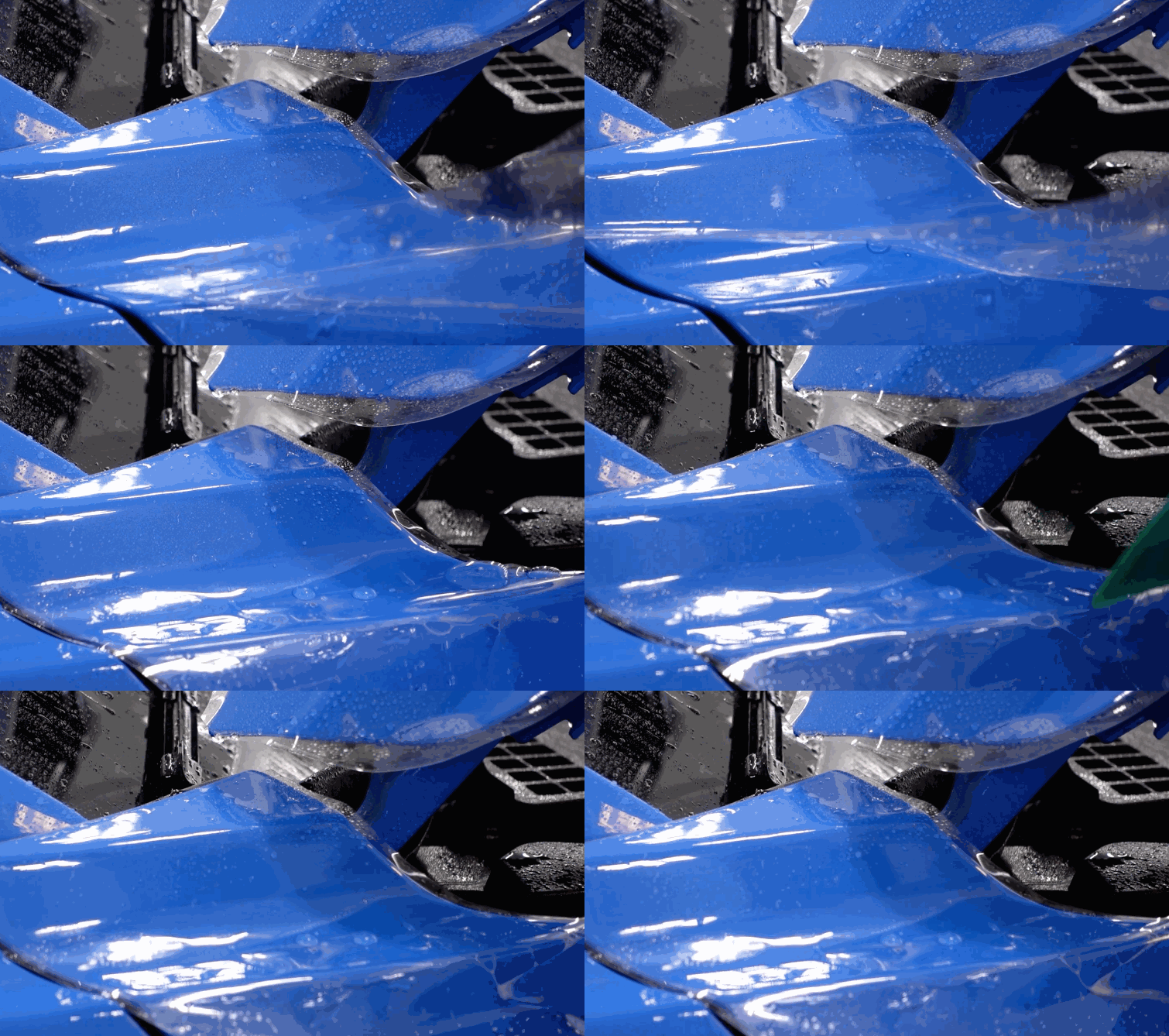
Paint protection film is primarily designed to create a durable, transparent barrier against common forms of physical and environmental wear. It takes the contact that would otherwise occur directly against the vehicle’s clear coat and paint.
Rock Chips and Road Debris
This is one of the strongest reasons daily drivers consider PPF. The front bumper, hood, fenders, and mirrors repeatedly face material thrown backward by other vehicles. Film provides a sacrificial surface that can absorb many minor impacts before they reach the finish underneath.
Light Scratches and Surface Marks
Modern PPF can also help with light abrasions and incidental surface contact. Many films have self-healing properties that allow minor marks in the film to become less noticeable with heat.
Bugs and Everyday Contamination
PPF gives bug residue, bird droppings, and other contaminants a surface other than the original clear coat to contact. Those contaminants should still be removed appropriately rather than left on the vehicle indefinitely.
There are limits. A sufficiently large stone, deep scratch, collision, or severe impact can damage both the film and the paint underneath. PPF works best when viewed as a sacrificial protective layer, not an invisible shield that makes bodywork impossible to damage.
Which Areas of a Daily Driver Need PPF the Most?
For many daily drivers, the highest-value PPF coverage is concentrated at the front of the vehicle because that’s where incoming debris most frequently strikes. You can protect those high-exposure panels without automatically committing to full-body coverage.
The front bumper is an obvious starting point, but we also pay close attention to the hood, front fenders, side mirrors, and other leading surfaces. On vehicles that spend considerable time on the 91 or I-215, those panels continuously face whatever surrounding traffic kicks into their path.
Coverage can then expand according to how the vehicle is used. Rocker panels may deserve consideration on vehicles exposed to substantial road grit. Door edges or other contact-prone areas can matter for a car frequently parked in tighter spaces. Owners who are particularly concerned about maintaining the entire exterior can move toward broader or full-body coverage.
At Freeway Tint, we prefer to match PPF installation coverage to exposure rather than automatically assuming more film is always the right answer. A Riverside commuter primarily concerned about freeway chips may get what they need from targeted protection, while another owner may have good reasons to protect substantially more of the vehicle.
Is PPF Only Worth It for New or Expensive Cars?
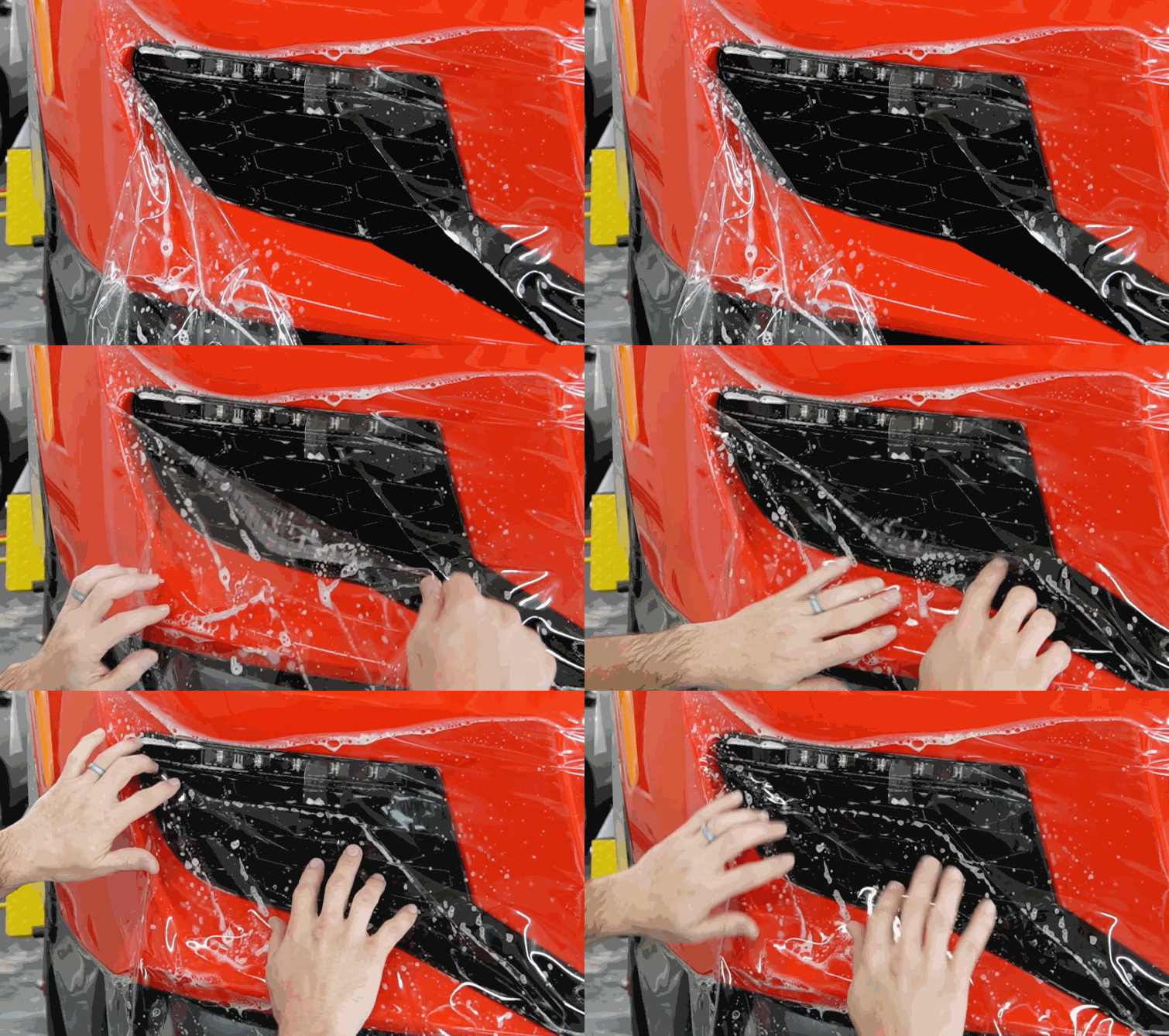
No. PPF can make sense for an ordinary daily driver whenever preserving the existing paint condition matters to the owner. Vehicle price is only one part of determining whether the investment is worthwhile.
A new vehicle is an obvious candidate because the factory finish can be protected before road wear accumulates. However, a well-maintained used vehicle with paint still in good condition can also benefit from vehicle paint protection. What matters is what you’re protecting and what condition it is in when the film is installed.
Existing imperfections deserve attention because transparent film does not function like paint correction or refinishing. Chips, scratches, and other defects can remain visible underneath it. Before installation, the paint should therefore be inspected so expectations are realistic and any appropriate preparation can be discussed.
The more useful question isn’t whether the car is expensive enough for PPF. It’s whether you care enough about preserving its current finish to protect it from the wear your daily routine is likely to create.
How Long Do You Need to Keep Your Car for PPF to Make Sense?
You do not need to keep a vehicle for a specific number of years for paint protection film to make sense, but longer ownership generally gives the film more time to protect against accumulated wear. The decision depends more on your expectations for the paint than on reaching a particular ownership milestone.
A driver planning to keep a car for many years may value PPF because small chips, abrasions, and other cosmetic damage have more time to accumulate. Preserving the factory finish from the beginning can be easier than addressing years of scattered damage later.
Shorter ownership does not automatically rule it out. Some people simply prefer keeping their vehicles in excellent cosmetic condition while they own them. Others may decide that normal wear is acceptable, especially when they expect to replace the vehicle relatively soon.
This is where PPF value becomes personal. The film makes the most financial and practical sense when the condition it helps preserve is something you actually care about maintaining.
Want to see more about our other services?
Does PPF Make Your Daily Driver Maintenance-Free?
No. PPF reduces direct exposure of the underlying paint, but your daily driver still needs regular washing and appropriate care. Dirt, insects, mineral deposits, bird droppings, and road film should not be allowed to accumulate simply because there is protective film underneath them.
The difference is that you’re maintaining a sacrificial surface over the paint. That can be especially reassuring on a car that spends its week moving through Riverside traffic and then sits outdoors between drives.
For everyday maintenance:
- Wash regularly. Removing accumulated road film keeps contaminants from sitting on the PPF unnecessarily.
- Address bug residue promptly. Riverside freeway driving can leave substantial insect contamination across forward-facing surfaces.
- Remove bird droppings carefully. Avoid aggressive scraping or rubbing, even when the paint underneath is protected.
- Use film-compatible products. Harsh chemicals and abrasive products are unnecessary for routine PPF care.
- Inspect edges periodically. Catching unusual lifting or damage early gives you an opportunity to have the film evaluated.
PPF should make protecting the original finish easier, not encourage neglect. A daily driver will still get dirty and require care. The advantage is that routine exposure is happening against the film rather than directly against the factory paint in protected areas.
How Does Professional PPF Installation Affect the Result?
A professional PPF installation matters because film performance depends on more than the material itself. Preparation, fitment, positioning, edge work, and final inspection determine how naturally the protection integrates with the vehicle.
Paint condition comes first. The surface needs to be inspected and thoroughly cleaned so dirt or bonded contamination is not sealed beneath a transparent film. Existing chips, scratches, or other imperfections also need to be identified because PPF will not simply make them disappear.
Fitment becomes equally important once installation begins. Bumpers contain curves, openings, body lines, sensors, and other details that require more care than a flat piece of glass. Hoods, mirrors, fenders, and rocker panels each present their own installation challenges.
Poor workmanship can leave contamination underneath the material, distracting edges, inconsistent alignment, or areas prone to lifting. A clean paint protection film installation, by contrast, should preserve the vehicle without making the film itself the first thing you notice.
At Freeway Tint, we consider that discretion part of a successful installation. The purpose is to protect the car you already like, not make it look as though its exterior has been wrapped in an obvious layer of material.
Is Paint Protection Film Worth It for Riverside Daily Drivers?
For many Riverside daily drivers, paint protection film is worth considering because regular freeway mileage and everyday use create repeated opportunities for chips, abrasions, contamination, and cosmetic wear. Its value is strongest when keeping the original paint in better condition matters to you.
PPF will not eliminate maintenance, prevent every possible impact, or keep a heavily used vehicle permanently flawless. What it can do is place a replaceable protective layer over vulnerable paint, allowing the film to take much of the routine exposure that would otherwise reach the finish directly.
That distinction is what makes PPF useful on a daily driver. A car that actually gets driven has something to protect against.
At Freeway Tint, we can inspect your vehicle, discuss your Riverside driving habits, and recommend coverage based on the areas that genuinely need protection. Contact us for professional PPF installation in Riverside, CA, and we’ll help you choose a paint protection film package that makes sense for your car, your budget, and the way you use it every day.