
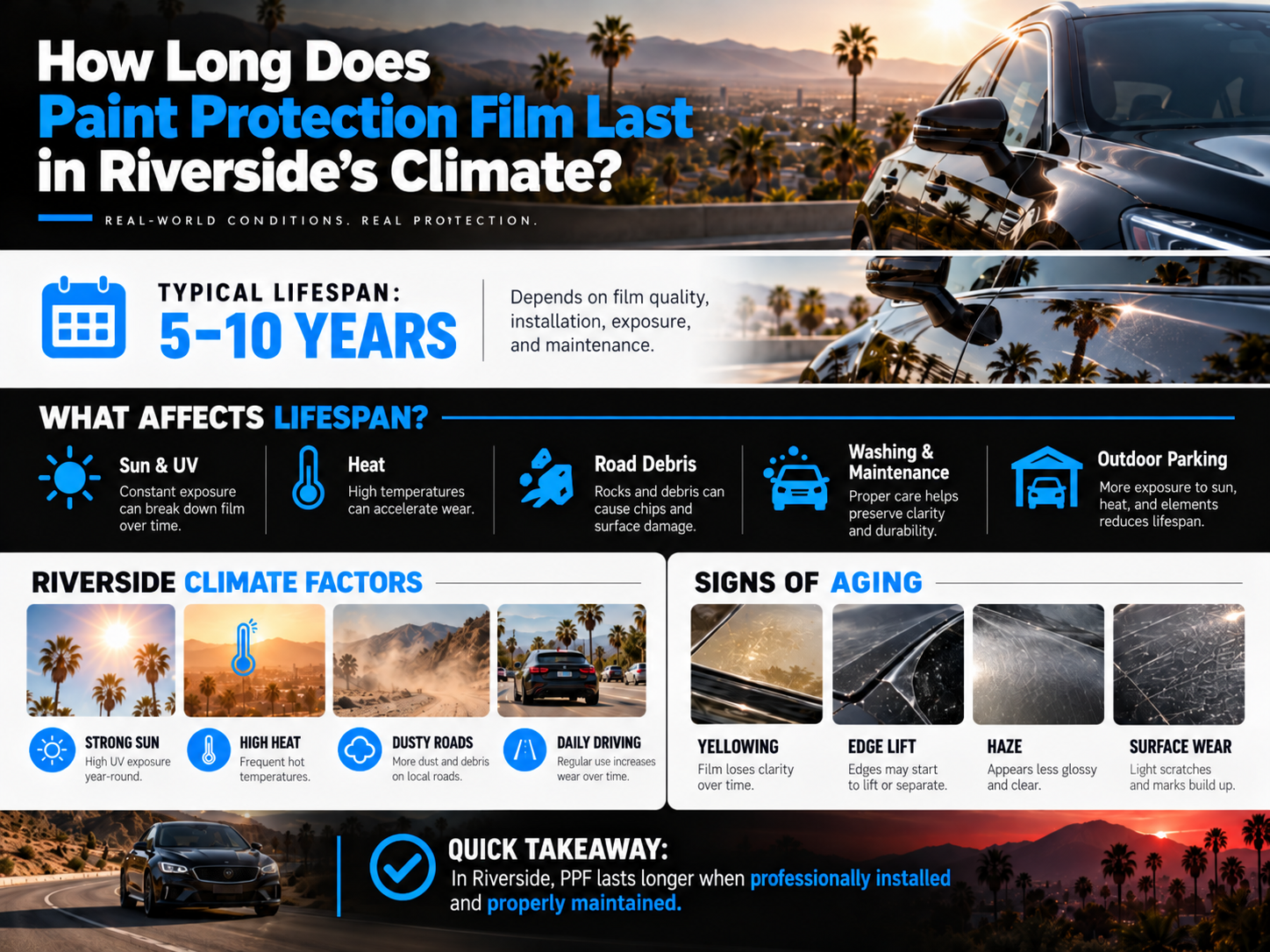
High-quality paint protection film typically lasts around 5 to 10 years, although some premium films can remain in good condition longer with proper installation and maintenance. In Riverside, CA, the actual lifespan depends on how well the film withstands intense sunlight, summer heat, road exposure, and everyday use.
Most Riverside drivers can expect quality paint protection film to provide approximately 5 to 10 years of useful service. Film construction, professional PPF installation, UV exposure, driving frequency, and maintenance habits all influence how long it retains its appearance and protective performance.
Riverside’s climate presents an interesting combination of challenges. Summer temperatures regularly climb into the 90s and sometimes exceed 100°F, while strong sunlight, airborne dust, and frequent freeway driving create additional exposure throughout the year. These conditions do not necessarily cause premature failure, but they can influence how different films age.
It’s also important to distinguish between a manufacturer’s warranty and the actual PPF lifespan. A 10-year warranty, for example, does not guarantee that every installation will remain in perfect condition for exactly 10 years. Warranty coverage depends on the manufacturer’s terms, while paint protection film durability depends on the conditions the material experiences throughout its service life.
Does Riverside’s Summer Heat Shorten the Life of PPF?
Riverside’s summer heat does not automatically shorten the life of high-quality PPF, but prolonged exposure to elevated temperatures can contribute to gradual material aging. Films engineered for automotive use are designed to tolerate outdoor conditions, although their resistance varies by product and construction.
One detail that matters is how hot the vehicle’s surface becomes. A dark-colored hood parked under direct sunlight can reach temperatures considerably higher than the surrounding air. Over time, repeated heating during the day and cooling overnight creates thermal expansion and contraction that the film and adhesive must accommodate.
That makes several aspects of PPF heat resistance particularly important:
- Film flexibility: Quality materials must accommodate normal expansion and contraction without becoming excessively brittle.
- Adhesive stability: The adhesive needs to maintain a reliable bond through changing surface temperatures.
- Edge integrity: Properly finished edges should remain secure despite repeated environmental exposure.
- Topcoat performance: The outer surface must withstand heat and sunlight without deteriorating prematurely.
A vehicle parked outdoors every day in Riverside experiences a different level of exposure than one kept in a shaded garage. Neither situation automatically determines the film’s lifespan, but the difference can become meaningful over several years.
At Freeway Tint, we consider those conditions when discussing film selection. A suitable Riverside PPF installation should account for the demands of Southern California’s climate rather than relying on the assumption that every film performs identically.
The objective is to choose a product whose construction, adhesive, and protective topcoat are appropriate for sustained automotive exposure. That gives the film a better opportunity to maintain its appearance and adhesion through Riverside’s hotter months.
How Does UV Exposure Affect Paint Protection Film Over Time?
Prolonged UV exposure can gradually influence the appearance and performance of paint protection film, although modern premium products are formulated to resist sunlight-related deterioration. The quality of the film’s materials and protective topcoat plays a major role in how well it ages.
One of the most recognizable concerns is PPF yellowing. Older or lower-quality films may develop noticeable discoloration after extended exposure to sunlight. Depending on the material, aging can also affect transparency, surface gloss, or the overall clarity of the film.
Modern UV-resistant paint protection film generally uses more advanced polyurethane formulations and protective topcoats to improve resistance to these changes. However, not every product uses the same technology, and UV resistance should not be confused with immunity to aging.
The amount of exposure also varies across a vehicle. Horizontal surfaces such as the hood receive substantial direct sunlight, while vertical panels experience different angles and durations of exposure. Parking orientation, shade, cleaning practices, and environmental contamination can further influence those differences.
That is why two vehicles fitted with the same product in Riverside may not demonstrate identical PPF durability after several years. Film quality establishes an important starting point, but the environment determines how that material is tested over time.
Can Riverside Freeway Driving Wear Out PPF Faster?
Frequent freeway driving can accelerate physical wear on PPF because the film repeatedly encounters small impacts, abrasive particles, and contaminants. Unlike gradual environmental aging, this type of deterioration is directly connected to how often and where the vehicle is driven.
A commuter regularly traveling the 91 Freeway, SR-60, or I-215 may accumulate considerable wear on forward-facing panels, particularly when driving near heavy traffic or through areas with loose road material.
The front bumper generally receives the most direct exposure, followed by the hood and side mirrors. Rocker panels can experience additional abrasion from grit thrown up near the wheels.
Over time, repeated impacts may leave small marks, localized damage, or surface wear in the film itself. Self-healing topcoats can help certain superficial marks become less noticeable, but they cannot eliminate deep cuts, punctures, or every impact mark.
This distinction matters when evaluating paint protection film wear. A film can remain securely adhered and continue protecting the paint underneath while showing visible evidence of years of freeway mileage.
For drivers considering PPF for daily drivers, that accumulated wear is not necessarily a sign that the product has failed. The film is intended to act as a sacrificial layer. Its condition should be assessed according to the severity of the damage and whether its protective function remains intact.
What Are the Biggest Factors That Determine PPF Lifespan?
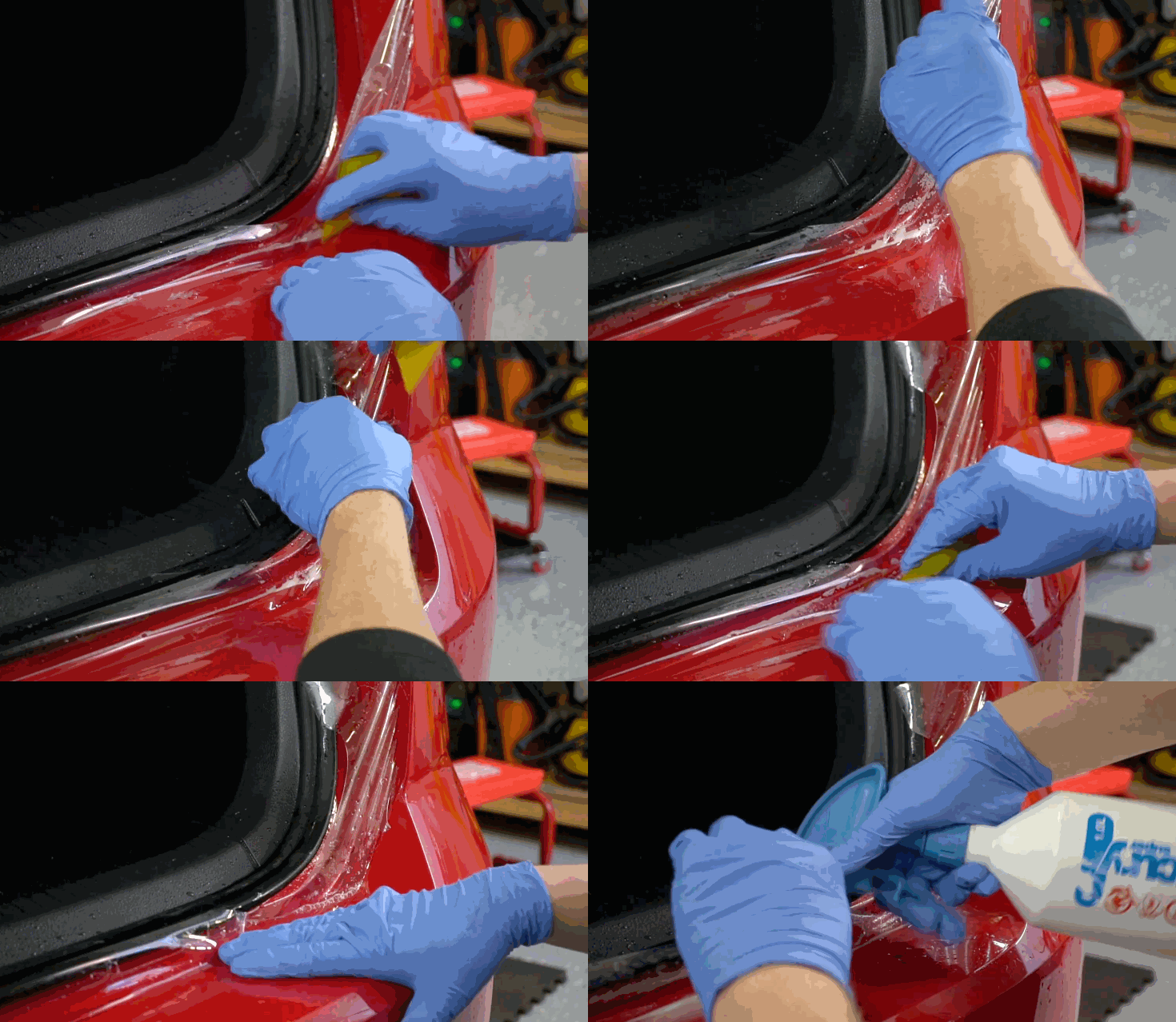
The biggest factors affecting PPF lifespan are film quality, installation workmanship, environmental exposure, driving habits, maintenance, and the condition of the surface underneath. Together, they determine how well the material maintains its appearance, adhesion, and protective properties.
Six factors deserve particular attention:
- Film construction: Premium polyurethane films with durable topcoats and stable adhesives generally offer better long-term resistance to environmental aging.
- Installation quality: Proper preparation, accurate fitment, and secure edges help reduce installation-related problems that could shorten service life.
- Outdoor exposure: Frequent parking under Riverside’s direct sunlight increases the amount of heat and UV exposure the film experiences.
- Driving frequency: Higher mileage, particularly on busy freeways, increases opportunities for physical impacts and abrasive wear.
- Cleaning habits: Removing contaminants appropriately helps prevent unnecessary staining and surface deterioration.
- Existing paint condition: Damaged, poorly prepared, or compromised paint can affect adhesion and complicate future film removal.
Some of these PPF lifespan factors are largely within the owner’s control. Washing practices, parking choices, and prompt contaminant removal can make a difference. Others, including unavoidable road conditions and daily commuting requirements, are simply part of using the vehicle.
At Freeway Tint, we believe paint protection film longevity begins before the material is applied. Evaluating the vehicle’s existing finish, discussing its typical exposure, and choosing an appropriate product are important parts of planning a professional PPF installation.
Ultimately, two Riverside vehicles with identical film can age differently because their daily conditions are not identical. Understanding those differences helps owners establish realistic expectations and make better decisions about protecting their investment.
What Are the Signs That Paint Protection Film Needs Replacement?
Paint protection film may need replacement when discoloration, cracking, peeling, or significant surface damage begins affecting its appearance or protective performance. The condition of the material is usually a more useful indicator than its age alone.
Some warning signs are relatively easy to identify:
- Yellowing or discoloration: Noticeable color changes that remain after proper cleaning.
- Edge lifting: Sections of film separating from the paint, particularly around corners and panel edges.
- Persistent staining: Contamination that has penetrated or permanently affected the film’s surface.
- Cracking: Visible fractures that indicate material deterioration.
- Deep scratches: Damage extending beyond what the film’s self-healing topcoat can address.
- Impact damage: Tears, punctures, or heavily damaged areas that compromise protection.
Not every visible mark means you need a PPF replacement. Ordinary dirt, removable water spots, and minor surface marks may be addressed through appropriate cleaning or the film’s self-healing properties.
When evaluating damaged paint protection film, pay attention to whether the problem is isolated or widespread. A damaged bumper section may only require replacing that panel’s film, while deterioration across multiple surfaces could justify more extensive work.
Knowing when to replace PPF comes down to recognizing the difference between normal wear and material that can no longer perform as intended.
Want to see more about our other services?
How Can You Make Paint Protection Film Last Longer in Riverside?
Consistent cleaning, prompt contaminant removal, film-compatible products, and reduced environmental exposure can help extend the service life of paint protection film. Riverside’s dusty conditions and intense sunshine make these habits particularly valuable for vehicles parked outdoors.
Wash Before Contaminants Build Up
Airborne dust, insect residue, bird droppings, and mineral deposits should be removed before they remain on the surface for extended periods.
Use a gentle automotive shampoo compatible with PPF, clean microfiber wash media, and appropriate drying techniques. Avoid abrasive scrubbing, especially when removing dried contamination.
Protect Film Edges
Edges deserve particular attention during routine PPF maintenance. Avoid directing concentrated high-pressure water streams closely against film boundaries, particularly where the material wraps around panel edges.
Careful washing and drying help reduce unnecessary mechanical stress on these areas.
Limit Prolonged Exposure When Possible
Covered parking can reduce the amount of direct sunlight and environmental contamination reaching the film. Although outdoor parking is unavoidable for many Riverside drivers, using available shade or a garage can help reduce prolonged exposure.
Good PPF care in Riverside is about consistency rather than complicated treatments. Maintenance cannot reverse normal aging or repair severely damaged material, but it can help prevent avoidable deterioration.
Does Professional PPF Installation Affect How Long the Film Lasts?
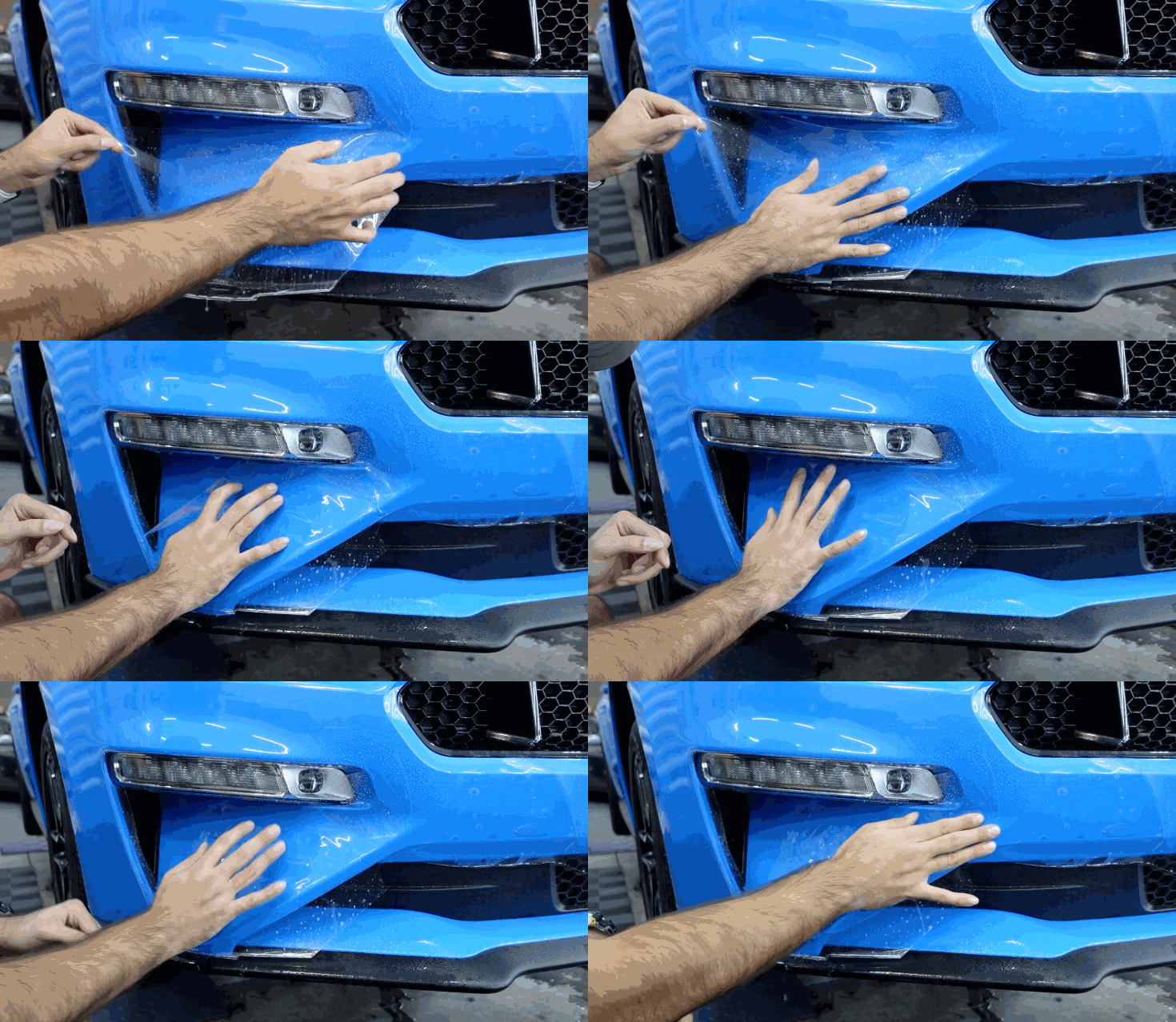
Professional PPF installation directly influences longevity because inadequate preparation, inaccurate positioning, and poor edge finishing can contribute to premature lifting or adhesion problems.
A lasting installation begins with understanding the condition of the painted surface. Existing contamination must be removed, and the paint should be inspected before film application. Accurate pattern fitting and controlled positioning then help the material conform to the vehicle without unnecessary tension.
Complex bumpers, mirrors, recessed areas, and curved panel edges require particular attention. These locations can become vulnerable to lifting when the film is poorly fitted or improperly finished.
Initial curing also matters. The adhesive needs appropriate conditions and time to develop its intended bond, and owners should follow the installer’s aftercare instructions before washing or exposing the film to unnecessary stress.
At Freeway Tint, we consider film selection, surface preparation, precise fitment, and final inspection essential parts of paint protection film installation. Our goal is to provide protection that integrates cleanly with the vehicle and performs reliably over time.
Even the best PPF installer in Riverside cannot make an unsuitable product last indefinitely. Quality materials and careful workmanship must work together to achieve dependable long-term results.
Keep Your Paint Protected Beyond the First Few Years
The lifespan of paint protection film in Riverside depends on more than the number of years since installation. Film quality, Southern California heat, UV exposure, driving habits, maintenance, and workmanship all influence how the material ages.
Starting with a premium product and professional installation provides a strong foundation, but ongoing care and occasional inspections are equally important. Knowing when to maintain, repair, or replace existing film helps keep the original paint protected without spending money on unnecessary replacement.
At Freeway Tint, we can evaluate your existing PPF, discuss whether individual panels need replacement, or help you choose new protection based on your vehicle’s condition and how you use it.
Contact us for professional PPF installation in Riverside, CA, or bring your vehicle in for an assessment of its current film. Whether you’re protecting a new car or deciding what to do with aging PPF, we’ll help you choose an approach that makes sense for your driving habits, ownership plans, and long-term paint protection needs.