
Applying ceramic coating over paint protection film (PPF) can be worth it for Riverside drivers who want physical paint protection and easier exterior maintenance in one system. PPF helps absorb minor impacts and abrasions, while ceramic coating adds a hydrophobic surface that makes water, dust, and everyday contamination easier to remove.
Ceramic coating and PPF work together because they perform different jobs. Paint protection film provides a transparent physical barrier against road debris and light surface damage, while ceramic coating improves water repellency, surface slickness, and cleaning convenience. For vehicles exposed to Riverside’s sunshine, dusty conditions, and frequent freeway travel, combining both can offer practical advantages over either treatment alone.
However, installing both products isn’t necessary for every vehicle. The value depends on the coverage you’ve selected, how often you wash your car, where you park, and whether the additional convenience justifies the expense.
Understanding what each layer contributes is the best way to determine whether ceramic coating over PPF is a worthwhile investment.
Can You Apply Ceramic Coating Directly Over PPF?
Yes, ceramic coating can be applied directly over compatible paint protection film once the film has been properly installed and is ready for additional treatment. The coating bonds to the film’s outer surface rather than the original automotive paint underneath.
Compatibility matters because not every coating is formulated for every type of PPF. Modern films often feature specialized topcoats, and some already include hydrophobic properties that overlap with the benefits of ceramic coating.
Before combining the products, we consider three important details:
- Film compatibility: The ceramic coating should be approved for the specific PPF surface and its protective topcoat.
- Installation timing: Newly installed film needs to reach the appropriate curing stage before coating application, according to manufacturer instructions.
- Surface preparation: The film must be clean and free of residues that could interfere with proper coating adhesion.
The process is not simply about adding another product on top of the vehicle. A compatible coating, appropriate preparation, and correct application conditions are essential for achieving the intended results.
At Freeway Tint, we approach ceramic coating over PPF as a complementary treatment, not an automatic requirement. The first step is determining whether the film already provides the surface characteristics the owner wants.
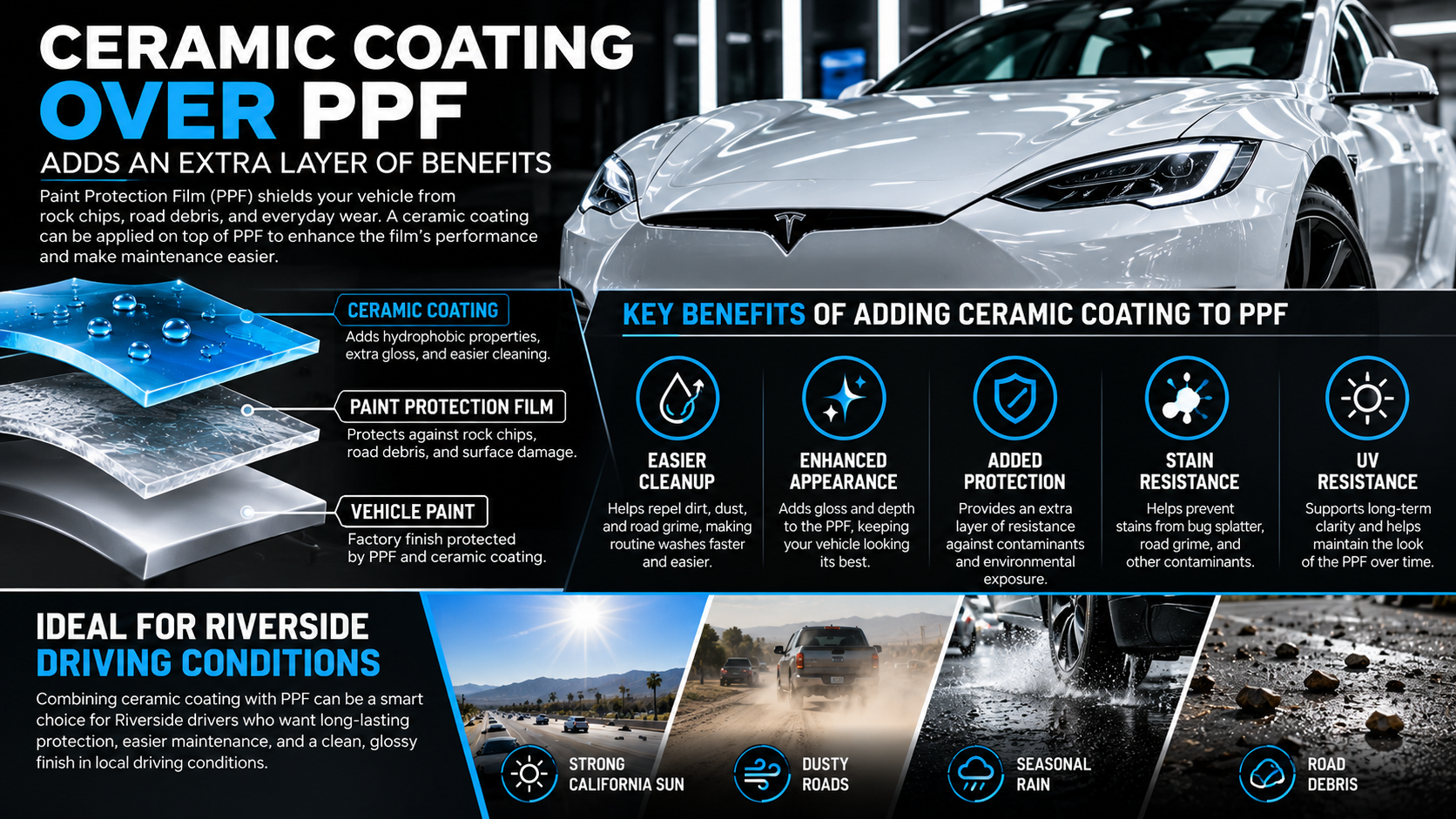
What Does Ceramic Coating Add to Paint Protection Film?
Ceramic coating primarily improves the surface behavior of PPF rather than significantly increasing its resistance to physical impacts. Its most noticeable contribution is making the protected exterior less prone to holding water and easier to clean.
A More Hydrophobic Surface
Ceramic coatings create a water-repellent finish that encourages droplets to bead and move across the surface. This can make washing and drying more convenient, particularly when water would otherwise remain across large body panels.
However, hydrophobic behavior does not prevent water spots completely. Riverside’s mineral-rich water can still leave deposits when droplets evaporate on a hot surface.
Less Effort Removing Everyday Contamination
Dust, road grime, and insect residue may release more easily from a properly maintained coated surface. That doesn’t mean contaminants cannot stick, but routine cleaning can require less effort.
Improved Surface Appearance
Many ceramic coatings enhance gloss and create a slicker finish. On compatible glossy PPF, this can contribute to a smooth, polished appearance.
These benefits are different from the impact resistance provided by the film itself. Ceramic coating does not replace PPF’s physical protection, and applying it over the film will not make the vehicle immune to scratches, chips, or other damage.
Why Does Combining PPF and Ceramic Coating Make Sense in Riverside?
Combining PPF and ceramic coating can be particularly useful in Riverside because local driving conditions expose vehicles to both physical road hazards and persistent surface contamination. The film addresses impacts, while the coating can simplify the cleaning required afterward.
Consider a vehicle that regularly travels the 91 Freeway or I-215. Its front bumper and hood encounter small stones, insects, and road debris, making PPF installation valuable for those exposed areas.
Meanwhile, Riverside’s dry conditions allow dust and fine particles to accumulate across the exterior. Cars parked outside near busy roads or commercial areas may require frequent cleaning, even when they haven’t traveled far.
A coated PPF surface can make that maintenance more manageable, especially when contaminants are removed before they become heavily bonded.
Strong Southern California sunlight adds another consideration. Ceramic coating can help maintain a clean, glossy appearance, but it should not be treated as a substitute for the UV-resistant construction of quality paint protection film.
For many Riverside owners, the strongest argument for combining these treatments isn’t simply having two protective products. It’s having a physical barrier against road wear and a surface that’s more convenient to maintain throughout the week.
Is Ceramic Coating Still Useful if Your PPF Already Has a Hydrophobic Topcoat?
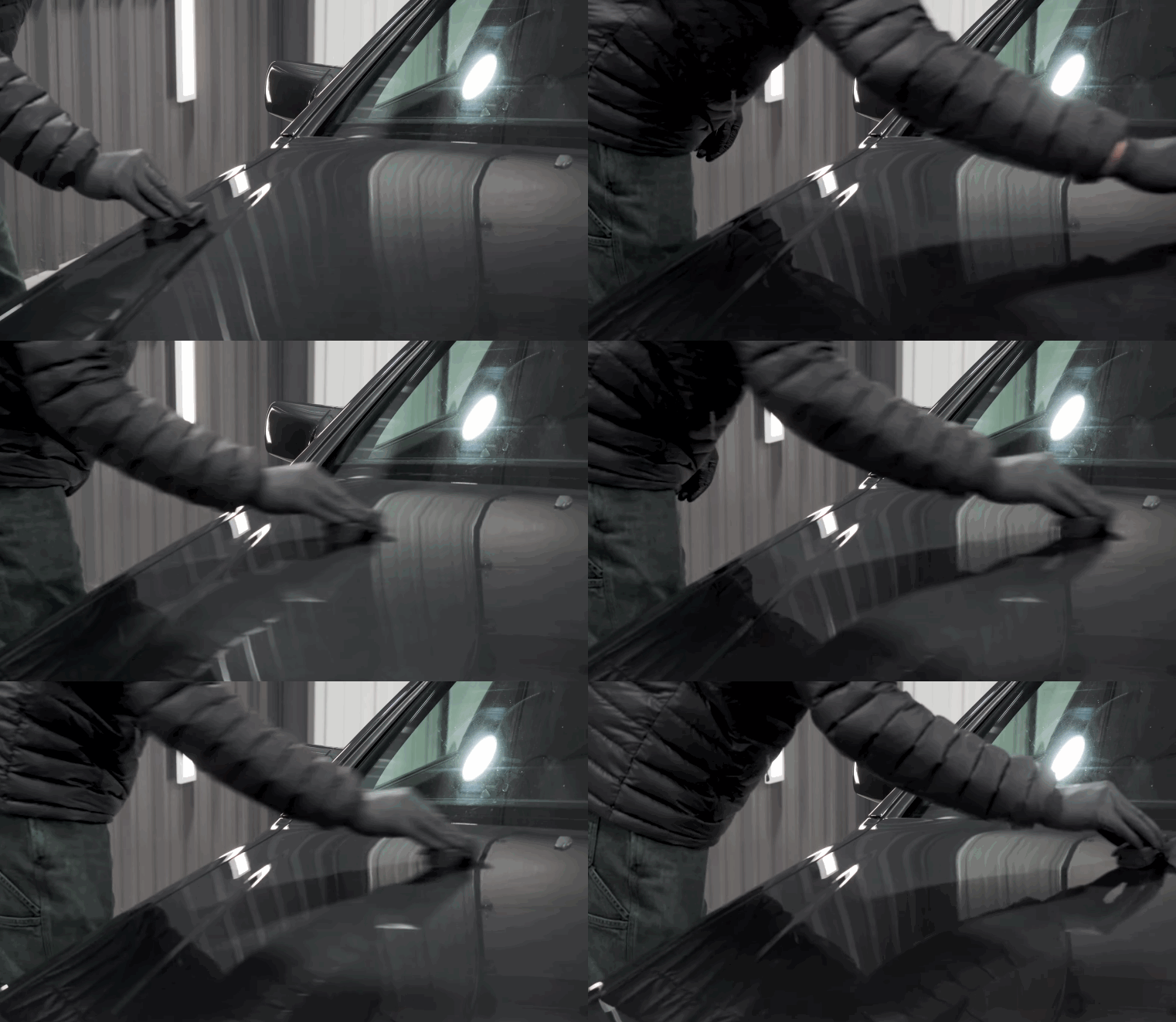
Ceramic coating may provide limited additional value when your PPF already has strong hydrophobic and stain-resistant properties. Some premium films are engineered with advanced topcoats that deliver many of the same surface benefits owners expect from ceramic coatings.
That creates an important distinction between adding protection and duplicating performance.
A high-quality film may already offer water repellency, resistance to certain contaminants, and a glossy appearance. Applying another coating could improve some characteristics, but the difference may not be dramatic enough to justify the additional expense.
Before recommending ceramic coating, we consider the existing film’s specifications and how it performs during washing. A product that already sheds water effectively and cleans easily may not need much improvement.
At Freeway Tint, we believe the decision should be based on what the coating genuinely adds to your particular PPF. Paying for overlapping features only makes sense when the additional performance or maintenance convenience is valuable to you.
Should You Ceramic Coat the Entire Car or Only the PPF?
Ceramic coating can be applied to both compatible PPF and exposed automotive paint, allowing owners with partial film coverage to achieve more consistent surface behavior across the vehicle.
For example, a front-end PPF package may protect the bumper, hood, fenders, and mirrors while leaving the doors, roof, and rear panels uncovered. Applying ceramic coating across compatible surfaces can provide similar water-repellent and cleaning characteristics throughout the exterior.
There are two practical approaches:
- Coat only the PPF: Focus the additional treatment on the protected panels, particularly when the primary goal is easier removal of insects and freeway grime.
- Coat the PPF and exposed paint: Extend hydrophobic performance and cleaning convenience across the exterior, including areas without protective film.
The second option can be appealing when you want consistent maintenance across the vehicle. However, ceramic coating on unprotected paint does not provide the same rock-chip resistance as PPF.
The choice should reflect your existing coverage and maintenance priorities. A full-body PPF installation and a partial front-end package create different starting points, so the ceramic coating plan should be adjusted accordingly.
Want to see more about our other services?
Does Ceramic Coating Make PPF Last Longer?
Ceramic coating may help preserve the surface condition of paint protection film by making contamination easier to remove, but it does not guarantee a longer PPF lifespan. The film’s construction, installation quality, environmental exposure, and maintenance remain the primary factors determining its longevity.
A coating can reduce the effort needed to remove dirt, insect residue, and other contaminants. Less aggressive cleaning may also reduce unnecessary friction against the film’s topcoat over time.
However, ceramic coating cannot prevent the underlying PPF from aging, repair punctures, or stop adhesive deterioration. It also has its own service life, which may be shorter than that of the film beneath it.
For Riverside drivers, the advantage is primarily maintenance-related. Keeping the surface cleaner with less effort can help maintain its appearance, but the coating should not be viewed as a way to make PPF last indefinitely.
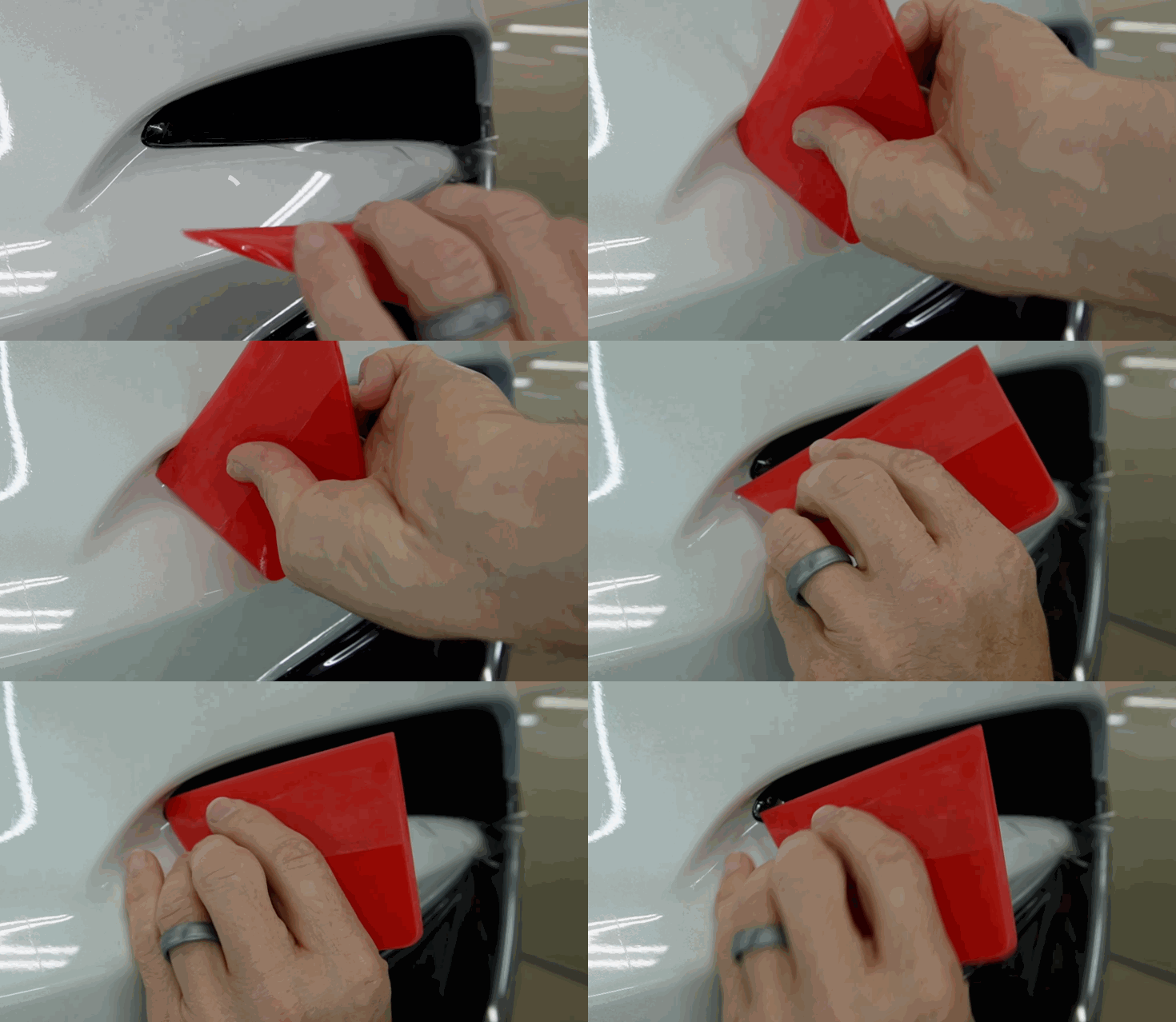
Is the Additional Cost of Ceramic Coating Over PPF Worth It?
Ceramic coating over PPF is generally worth the additional cost when easier maintenance, improved water repellency, and consistent exterior appearance are priorities. It becomes less compelling when the existing film already delivers satisfactory hydrophobic performance.
The decision depends on several factors, including how much of the vehicle is protected, how frequently it gets dirty, and whether the owner handles routine washing personally.
For a Riverside commuter who regularly encounters dust, insects, and freeway grime, reducing cleaning effort may justify the additional treatment. Someone who rarely drives or already finds their PPF easy to maintain may see less practical benefit.
It’s also worth considering the relationship between the two investments. Paint protection film provides the primary physical protection, while ceramic coating adds surface characteristics that make ownership more convenient.
At Freeway Tint, we prefer to evaluate these benefits separately. We wouldn’t recommend adding ceramic coating simply because you’ve purchased PPF. The additional treatment should solve a maintenance concern or provide an improvement you genuinely value.
Why Does Application Quality Matter When Combining Both Treatments?
Proper application matters because ceramic coating must be compatible with the film’s topcoat and applied to a clean, appropriately cured surface. Poor preparation or incorrect product selection can compromise the coating’s performance.
The order of installation is important. PPF is applied first, followed by the required curing period specified by the film manufacturer. Once the surface is ready, a compatible ceramic coating can be installed according to its own application and curing requirements.
Professional ceramic coating application also helps prevent several avoidable problems:
- Surface contamination: Residues left on the film can interfere with coating adhesion or create visible imperfections.
- Uneven application: Improper leveling may leave high spots, streaking, or inconsistent appearance.
- Product incompatibility: Some coatings may not be appropriate for particular PPF topcoats.
- Premature exposure: Washing or chemical exposure before the coating has sufficiently cured may affect its performance.
An experienced installer should also understand that matte and satin films require different considerations from glossy PPF. Products that alter surface appearance may be unsuitable when preserving a specific finish is the priority.
A professional PPF installation establishes the foundation, while careful ceramic coating application helps ensure the additional treatment performs as intended.
Is Ceramic Coating Over PPF the Right Choice for Your Riverside Vehicle?
Ceramic coating over PPF is worth considering when you want the impact protection of paint protection film combined with easier washing, improved water repellency, and a more manageable exterior maintenance routine. For Riverside drivers dealing with frequent freeway travel, dust, and prolonged outdoor exposure, those advantages can make everyday ownership more convenient.
However, the combination isn’t essential for every vehicle. Premium PPF may already provide excellent surface performance, and the additional coating should deliver benefits that justify its cost.
At Freeway Tint, we help Riverside drivers choose protection based on their vehicle’s condition, driving habits, and maintenance preferences. Whether you’re planning a new installation or considering ceramic coating over existing film, we’ll help you understand what each product contributes.
Contact us today to discuss professional PPF installation and ceramic coating in Riverside, CA. We can evaluate your vehicle, recommend compatible treatments, and help you decide whether combining both products makes sense for your long-term paint protection goals.