
Commercial window tint can help Riverside businesses reduce solar heat gain, control uncomfortable glare, and limit UV exposure that contributes to fading inside commercial spaces. The result can be a more comfortable, functional environment without giving up the natural daylight that makes offices and storefronts feel open.
For Riverside businesses, commercial window tint works by controlling solar energy as it passes through exterior glass. A professional window tint installation can reduce unwanted heat and glare while filtering UV rays that contribute to fading of merchandise, flooring, furnishings, and other interior materials.
That combination is particularly relevant in Riverside. Long, hot summers and abundant Southern California sunshine put storefront glass, office windows, and other large commercial glazing under prolonged solar exposure. Closing blinds may solve part of the problem, but it also eliminates views and daylight. Commercial film offers another approach: improve how the existing glass performs while keeping the windows useful.
The important point is that commercial window tint isn’t simply dark material applied to glass. Film selection can be tailored around heat rejection, glare, UV protection, appearance, and visible light, which makes the right product as important as the quality of the window tint installation itself.
Why Large Commercial Windows Can Become a Heat Problem in Riverside
Large commercial windows can introduce substantial solar heat into a building, particularly when the glass receives direct afternoon sun. In Riverside’s inland Southern California climate, that can leave spaces along the exterior noticeably warmer than areas only a short distance farther inside.
Window orientation has a major influence. West-facing glass can receive intense afternoon sun when outdoor temperatures are already high, while south-facing windows may experience extended solar exposure across much of the day. The more glass a property has, the more noticeable that heat gain can become.
This creates an uneven indoor environment. An employee sitting beside an exterior window may feel too warm while someone working deeper inside the same office feels perfectly comfortable. The same issue can affect a waiting room, retail display area, restaurant seating section, or showroom positioned against a sunny facade.
Around Downtown Riverside and commercial corridors throughout the city, large windows are often an important architectural and functional feature. Covering them permanently isn’t always desirable. Solar control window film provides another form of commercial heat control by addressing solar energy at the glass itself.
At Freeway Tint, that’s why we don’t approach Riverside commercial window tint as though every building needs the same film. Glass orientation, window size, existing glass characteristics, and the hours when sunlight hits the property all help determine what type of performance actually makes sense.
How Commercial Window Tint Reduces Heat Without Blocking Natural Light
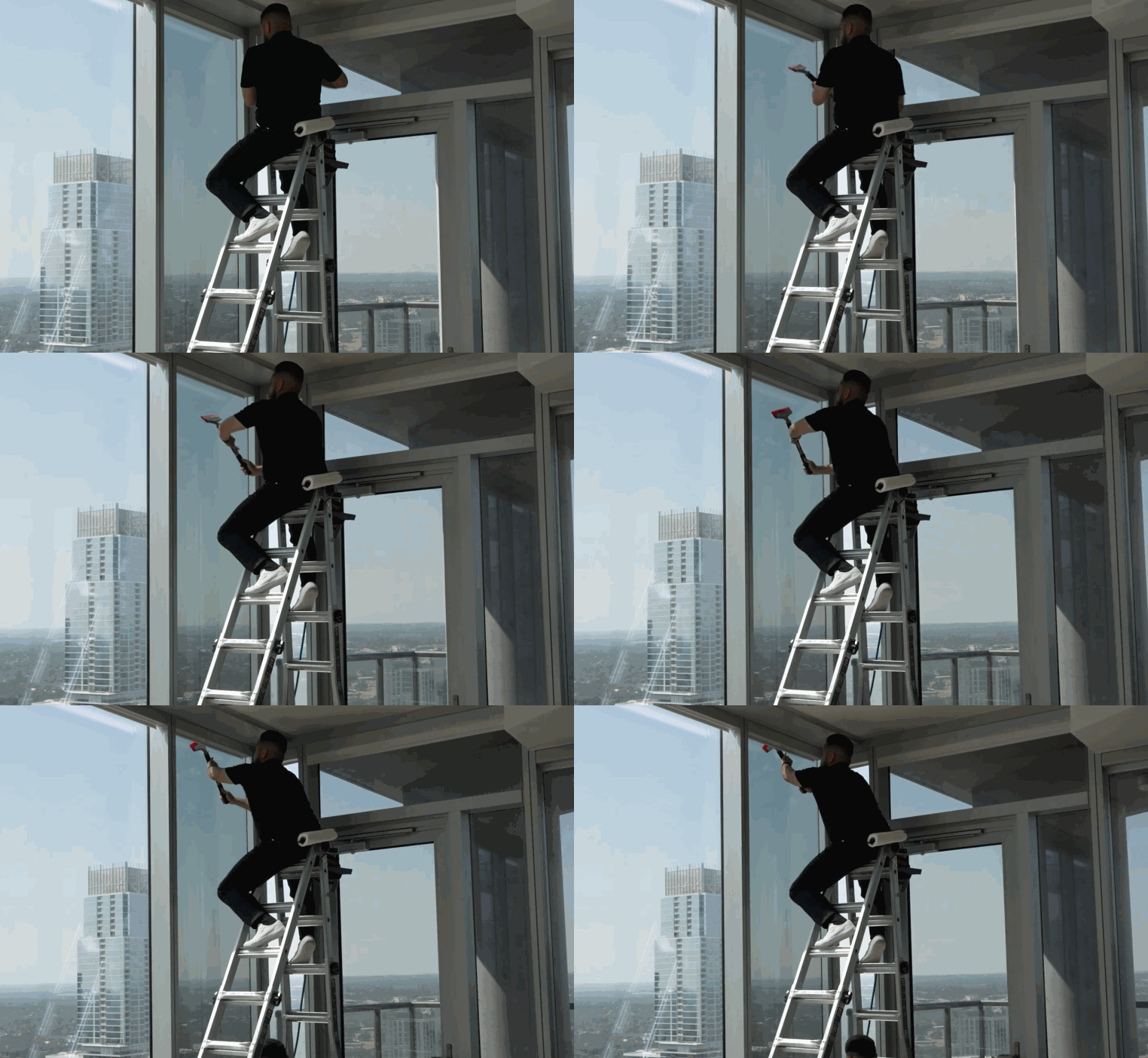
Modern commercial window film can reject substantial solar energy while continuing to transmit useful visible light. Heat reduction and darkness aren’t the same thing, so improving a window’s solar performance doesn’t automatically mean making an office or storefront feel closed off.
Solar energy contains more than the light our eyes see. A heat rejection window film is engineered to manage portions of that energy before they pass through the glass and contribute to indoor heat gain. This allows businesses to address heat more selectively than they could by simply installing an extremely dark film.
That distinction matters in commercial environments because daylight often has practical value. Retailers may want merchandise visible through storefront glass. Offices can benefit from naturally illuminated work areas. Restaurants, reception areas, and showrooms may depend on exterior views as part of the space itself.
The film can therefore be chosen around several performance characteristics. Visible light transmission determines how much daylight passes through, solar rejection affects heat control, and reflectivity influences both performance and exterior appearance. Different commercial solar film products balance those characteristics differently.
An energy-efficient window tint should ultimately make the existing glass work better for the property rather than undermine why the windows are there in the first place. Good solar control preserves the advantages of having glass while reducing some of the problems that come with prolonged sun exposure.
Can Commercial Window Tint Reduce Glare for Employees and Customers?
Yes. Commercial window tint can reduce excessive glare from direct sunlight, making screens, displays, workstations, and customer areas easier to use during bright portions of the day.
Glare is different from heat because it can make a space uncomfortable even when the room temperature is perfectly acceptable. An employee may struggle to read a computer screen, customers may have difficulty viewing a digital display, or a conference room television may become washed out whenever sunlight reaches it at the wrong angle.
The problem also moves. Morning sun may affect one side of a building, while afternoon light creates glare somewhere completely different. That’s why moving a monitor or closing a blind often feels like a temporary fix rather than a real solution.
Office window tint and glare reduction window film lower the intensity of incoming light before it reaches those interior surfaces. Depending on the film selected, that can improve visibility without requiring employees to spend the workday behind closed shades.
The goal isn’t to remove sunlight from the workplace. It’s to make that light easier to live and work with, especially in areas where direct exposure repeatedly interferes with how the space is actually used.
How Window Film Helps Protect Interiors From Fading
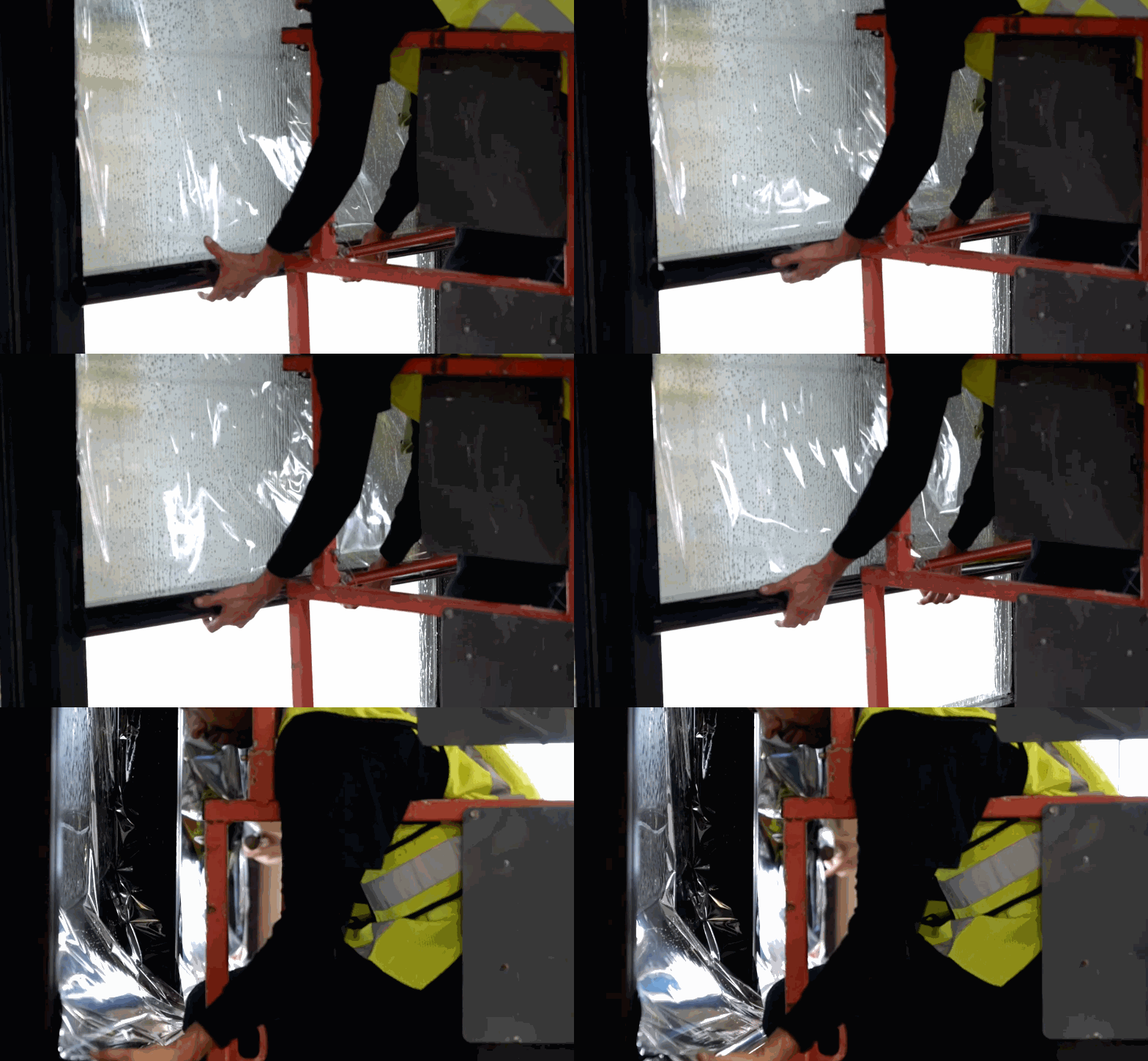
Commercial window film can significantly reduce UV exposure through treated glass, helping slow one of the major contributors to fading and deterioration inside businesses. This protection can be particularly valuable when expensive or appearance-sensitive materials sit close to exterior windows.
UV protection window film can help reduce exposure affecting:
- Retail merchandise displayed near storefront glass
- Flooring that receives direct sunlight throughout the day
- Furniture positioned beside exterior windows
- Artwork and decorative pieces exposed to repeated sunlight
- Product and promotional displays placed near storefronts
- Upholstery and fabrics susceptible to gradual discoloration
UV rays aren’t the only cause of fading. Visible light, heat, material quality, dyes, and age can all contribute, so no film can guarantee that an interior will never change color. The practical benefit is reducing one significant source of deterioration rather than promising complete immunity from it.
For a retailer with products displayed against a sunny storefront, that may be particularly important. An office with expensive flooring or furniture may value the same commercial window film benefits for completely different reasons.
At Freeway Tint, we consider what is actually behind the glass when recommending film. Strong interior fading protection may be a priority for one Riverside property, while another may care more about heat or glare. Matching the film to what the business needs to protect is ultimately more useful than treating every commercial installation the same way.
Which Riverside Businesses Can Benefit Most From Commercial Window Tint?
Businesses with substantial exterior glass, direct sun exposure, recurring glare, or interiors worth protecting are typically the strongest candidates for commercial window tint. The type of business matters less than what its windows face and what happens inside the space.
A retail storefront along the Magnolia Avenue corridor may need storefront window film because afternoon sunlight reaches merchandise and customer areas. An office in Downtown Riverside might have a completely different concern, such as glare across computer monitors or uncomfortable workstations positioned beside large windows.
The same principle applies to restaurants, salons, gyms, medical offices, professional practices, and showrooms. Glass is useful in all of these environments, but the way each property uses that glass is different. Restaurants may want to preserve outside views for customers, while a showroom may prioritize natural light without exposing products and furnishings to as much UV radiation.
This is why we approach business window tint according to the building rather than the industry. At Freeway Tint, we assess commercial glass applications based on window orientation, exposure, interior use, and the problem the business is actually trying to solve. The right commercial window tint in Riverside, CA should respond to the property itself, not a generic recommendation based on what’s written on the sign outside.
Want to see more about our other services?
Does Commercial Window Tint Help With Cooling Costs?
Commercial window tint may help reduce cooling demand by limiting solar heat gain through exterior glass, but actual energy savings depend heavily on the individual building. There isn’t a responsible percentage that applies to every commercial property.
Several variables influence the potential result:
- Amount of exterior glass: Larger glazed areas can introduce more solar energy into the building.
- Window orientation: West- and south-facing windows may experience substantially different exposure than shaded elevations.
- Existing glass: Glass construction and existing thermal performance affect how much improvement a film can provide.
- HVAC and insulation: Window film is only one part of the building’s overall thermal performance.
- Film selection: Different products have different solar heat rejection characteristics.
- Operating hours: A business occupied during peak afternoon heat may experience the benefits differently from one that closes earlier.
An energy-saving commercial window film can reduce the amount of heat the HVAC system needs to overcome, potentially lowering cooling demand during sunny periods. That doesn’t mean the air conditioning suddenly becomes unnecessary or that every property will see the same change in its utility bills.
There is also value that doesn’t appear directly on an energy statement. Better window tint energy efficiency can contribute to fewer hot spots and more consistent temperatures across occupied areas. For many businesses, simply making previously uncomfortable spaces easier to use can be a meaningful improvement on its own.
Why Professional Window Tint Installation Matters on Commercial Glass
Professional window tint installation is important for achieving uniform coverage, a clean finished appearance, and dependable long-term performance across commercial glass. Large windows make inconsistencies easy to see, so both product selection and workmanship deserve careful attention.
The Glass Has to Be Evaluated First
Commercial windows aren’t all constructed the same way. Glass type, coatings, pane configuration, condition, and exposure should be considered before selecting film. Not every product is appropriate for every glazing system, which makes compatibility part of a professional installation rather than an afterthought.
Preparation Determines What Gets Trapped Underneath
Before installation, the glass needs to be thoroughly cleaned and prepared. Dust, residue, and other contamination left behind can remain visible beneath the finished film, particularly across large storefront or office panels.
Finishing Is What People See Every Day
Accurate cutting, consistent alignment, controlled application, clean edges, and appropriate curing all contribute to the final appearance. Commercial spaces often involve multiple adjacent panes, making consistency from one panel to the next especially important.
Poor commercial window tint installation can leave bubbles, trapped debris, uneven borders, obvious seams, or edges that begin lifting prematurely. A professional window film installation addresses those details from the beginning so the film becomes part of the glass rather than a distraction on it.
Make Your Commercial Glass Work Better for Your Riverside Business
Commercial window tint can address three separate challenges at the glass: unwanted solar heat, disruptive glare, and UV exposure that contributes to interior fading. Addressing those issues can make a commercial space more comfortable and functional while allowing businesses to continue benefiting from natural daylight and exterior views.
The strongest solution isn’t necessarily the darkest film or the same product across every pane. Window orientation, glass construction, interior use, appearance preferences, and performance goals should all influence what gets installed.
At Freeway Tint, we help Riverside businesses evaluate those factors and select commercial films around the way their properties actually function. From individual problem areas to larger commercial projects, our focus is on matching the window tint installation to what the glass needs to accomplish.
If heat, glare, or sun exposure is making part of your property harder to use, contact us for professional commercial window tint and window tint installation in Riverside, CA. We can help identify the windows creating the biggest problems and recommend a film based on the improvements your business actually needs.